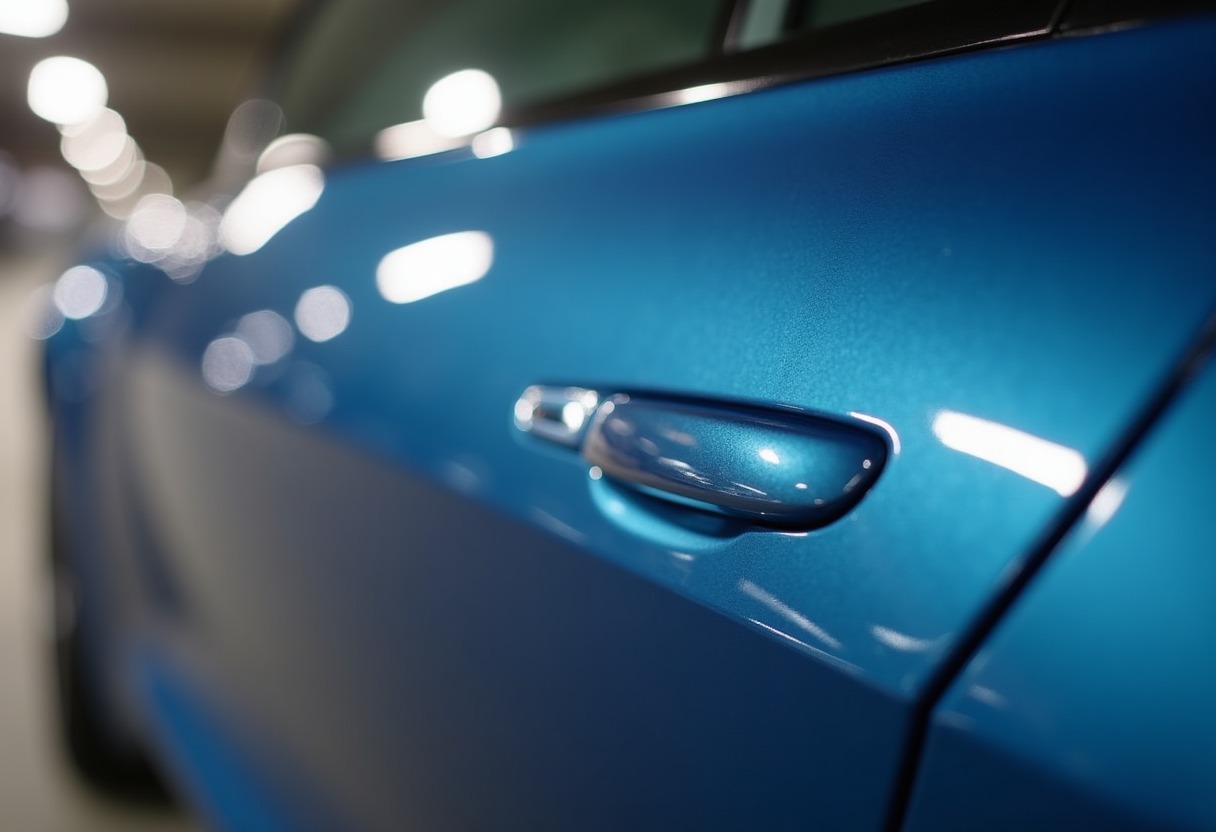
Tesla's thin door edges chip faster than most cars. The aluminum panels on Model 3 and Model Y combine lightweight construction with edges that measure roughly 2-3mm thick at the outermost point—half the thickness of typical steel door edges on conventional vehicles. One parking lot mishap against a concrete pillar or adjacent car door leaves permanent damage that costs $400-800 per panel to properly repair and match Tesla's multi-coat paint system.
Why Tesla Door Edges Need Protection More Than Other Cars
Tesla uses a 5-layer paint process that includes primer, base coat, clear coat, and UV protection layers. The edges receive less material coverage during factory application due to geometry—spray guns can't coat a sharp radius as thoroughly as flat panels. This makes the vulnerable 2-3mm edge zone even thinner in paint depth.
The issue compounds with Tesla's flush door handles. Opening your door in tight spaces means you can't gauge clearance the way traditional handles allow. You swing the door open, and the edge makes first contact before you realize you're too close. Model 3 and Model Y doors also lack the protective rubber strips that came standard on many 90s and 2000s vehicles.
Paint chips on door edges expose bare aluminum, which oxidizes differently than steel. While steel rusts with obvious orange-brown corrosion, aluminum forms white oxidation that's less visible initially but still compromises the protective paint barrier. Left unaddressed, moisture penetrates deeper into the panel structure.
Clear Paint Protection Film: Transparent and Nearly Invisible
Clear PPF (paint protection film) designed specifically for door edges runs 6-8 mils thick—roughly 0.15-0.20mm. Quality automotive-grade film uses thermoplastic urethane that absorbs impact energy and self-heals minor scratches through heat activation. The film bonds to the door edge contour and wraps slightly onto both the interior and exterior panel surfaces for complete coverage.
Installation requires careful surface prep: degreasing with isopropyl alcohol, ensuring the edge is completely clean of wax or sealant, and applying the film in sections while working out air bubbles with a squeegee. Pre-cut kits shaped for Tesla Model 3 and Model Y eliminate trimming, though bulk rolls allow custom coverage for other areas like door sills or rear bumper edges.
The film becomes nearly invisible once applied—you won't notice it from 3 feet away in most lighting. It yellows over 3-5 years of UV exposure, though premium brands like XPEL and 3M resist discoloration longer than generic options. Removal leaves no residue if done properly within the first 5 years, but adhesive can cure harder after that point, requiring heat guns and adhesive remover.
→ Shop door edge paint protection film on Amazon
Rubber and Vinyl Edge Guards: Visible but More Impact Resistant
Rubber or vinyl edge guards sit thicker than PPF—typically 2-4mm depending on the product. They attach via pre-applied adhesive backing and create a visible protective barrier along the door edge. Most products come in black, chrome, or color-matched options, though "color-matched" rarely matches Tesla paint exactly unless you order from specialty suppliers who mix to specific paint codes.
The added thickness provides better impact resistance than thin PPF. A door edge guard can take a direct hit from another car door or shopping cart and protect the paint underneath. The rubber compresses on impact rather than transferring force directly to the paint surface. This makes guards particularly effective in high-risk parking situations—gym parking lots, grocery stores, school pickup zones.
The aesthetic trade-off is obvious: you see the guard. Some owners prefer the functional look; others consider it a visual compromise that clashes with Tesla's minimal design language. Edge guards also collect dirt in the adhesive seam where they meet the door panel, requiring periodic cleaning to prevent grime buildup.
Cheaper guards peel in car washes or extreme temperature swings. Quality matters significantly here—3M and similar automotive-grade adhesives hold for years, while generic products fail within months. Expect to replace budget guards annually versus 3-5 years for premium options.
→ Shop car door edge protector strips on Amazon
Going Without: When Skipping Protection Makes Sense
Some owners skip door edge protection entirely. The reasoning varies: they park in controlled environments (home garage, assigned work spot), they're meticulous about door clearance, or they plan to address paint damage through periodic touch-up or eventual full PPF wraps.
Tesla's factory paint, while thin at the edges, holds up reasonably well with careful use. If you avoid tight parking spaces and use the camera system to check clearance before opening doors, you can minimize chip risk without added protection. The Best Tesla Model 3 Accessories and Best Tesla Model Y Accessories 2026 lists include multiple protection options, but none are mandatory for every owner.
Budget factors in too. Quality door edge protection runs $30-80 installed, which adds up across all four doors plus potential trunk edge coverage. That money might go toward floor mats or screen protectors instead—areas with more daily impact.
The long-term paint protection strategy matters. Owners planning comprehensive PPF coverage through services like XPEL Ultimate Plus often skip edge guards since the shop will cover edges as part of the full installation. Partial PPF packages sometimes include door edges anyway, making standalone guards redundant.
Direct Comparison: Film vs. Strips vs. Nothing
| Feature | Clear PPF | Rubber/Vinyl Strips | No Protection | |---------|-----------|---------------------|---------------| | Visibility | Nearly invisible after 1 week | Always visible, 2-4mm profile | None—factory appearance | | Impact Protection | Good for scratches, moderate for hard impacts | Excellent—absorbs direct door hits | None—full paint exposure | | Longevity | 3-5 years before yellowing or replacement | 1-5 years depending on quality and adhesive | N/A—paint chips are permanent | | Cost (4 doors) | $40-80 for quality pre-cut kits | $25-60 for full strip sets | $0 upfront, $400-800 per panel if damage occurs | | Installation Difficulty | Moderate—requires patience and squeegee work | Easy—peel and stick in 15 minutes | None | | Removal | Clean removal within 5 years, may need heat after | Leaves adhesive residue if low-quality | N/A |
The comparison shifts based on parking environment. Daily street parking in urban areas with tight spaces favors visible rubber guards—maximum protection trumps aesthetics when door dings happen weekly. Suburban garage parking with occasional public exposure makes clear PPF the better middle ground. Dedicated garage storage with minimal tight-space parking might justify skipping protection altogether.
Product Recommendations for Tesla Door Edge Protection
Pre-Cut Clear PPF Kits: These come shaped specifically for Model 3 or Model Y door edges, eliminating guesswork during installation. Look for 8-mil thickness and UV-resistant formulations. Apply in temperatures between 60-80°F for best adhesion, and give the film 24-48 hours to cure before exposure to car washes.
→ Shop adhesive door edge molding on Amazon
Automotive-Grade Rubber Edge Guards: Black rubber strips with 3M adhesive backing offer the best durability-to-cost ratio. D-profile or U-channel designs fit Tesla door edges better than flat strips. Measure your door edge thickness (usually 2-3mm) and choose guards sized to match—too loose and they fall off, too tight and they won't seat properly.
Bulk PPF Rolls: For owners protecting multiple areas beyond door edges—like wheel wells or trunk edges—bulk PPF rolls provide better value than pre-cut kits. You'll need a cutting mat, utility knife, and squeegee. This approach makes sense when combining with other protection projects documented in Protecting Tesla Paint Ppf Vs Ceramic Vs Vinyl.
Color-Matched Vinyl Strips: Specialty suppliers offer vinyl edge guards mixed to Tesla paint codes (Pearl White Multi-Coat, Midnight Silver Metallic, etc.). These cost 2-3x more than generic black strips but maintain factory appearance better while still providing visible protection. The color match degrades faster than paint due to UV exposure differences between vinyl and automotive clear coat.
→ Shop rubber door edge trim on Amazon
What Most Guides Miss: Edge Prep and Adhesion Issues
Door edge protection fails most often due to improper surface preparation, not product quality. Tesla applies a hydrophobic coating at the factory that repels water—and adhesives. Even PPF marketed as "peel and stick" won't adhere properly without removing this coating first.
The prep process requires isopropyl alcohol (70% minimum, 91% preferred) and microfiber cloths. Wipe the entire door edge thoroughly, working in one direction to avoid redepositing contaminants. Let the alcohol evaporate completely—30 seconds minimum in warm conditions, 2-3 minutes in cold. Any moisture under PPF or edge guards creates adhesion failure points that bubble or peel within weeks.
Temperature matters more than installation guides admit. Adhesive cures through chemical reaction that slows dramatically below 50°F. Installing in cold garage temperatures means the bond never reaches full strength, even if you heat the surface during application. Wait for warmer days or bring the car into a heated space for 2-3 hours before installation.
Check edge contamination that isn't visible: wax, ceramic coating, or spray sealant products often migrate onto door edges during application. These create an invisible barrier that prevents adhesion. Clay bar treatment removes embedded contamination better than alcohol alone—worth the extra 10 minutes per door if your car has any prior detailing products applied.
PPF and edge guards also fight Tesla's factory gap tolerances. Panel alignment varies between vehicles—some door edges sit perfectly flush, others show 0.5-1mm variation between front and rear doors. Pre-cut kits sized for "average" fitment may leave gaps or require trimming on cars at either tolerance extreme. Test-fit before removing all backing material, and plan for potential custom trimming.
FAQ
Do door edge guards affect Tesla's frameless windows? No—guards attach to the door's outer edge profile, well below where the window glass travels. Model 3 and Model Y frameless windows drop slightly when you open the door, but they make contact with the window seal channel built into the door frame, not the painted edge where guards install. Proper installation keeps guards at least 5mm below the window's lowest travel point.
Can you install PPF over existing paint chips? You can, but it won't hide the damage—clear film shows everything underneath. PPF works best as prevention, not repair. If chips already exist, use touch-up paint first (Tesla sells paint pens matched to factory codes), let it cure for 48 hours, then wet-sand smooth with 2000-grit sandpaper before applying film. This prevents the chip edges from creating visible lines under the PPF.
How long does door edge PPF actually last before yellowing? Quality film yellows noticeably after 3-5 years of daily sun exposure, sooner in extreme UV environments like Arizona or Florida. The yellowing comes from UV degradation of the urethane—it's chemical aging, not contamination, so cleaning won't reverse it. Budget brands yellow within 18-24 months. Plan to replace PPF every 3-4 years if you care about appearance, or wait until yellowing bothers you enough to justify removal.
Will edge guards damage paint when removed? Premium guards with automotive-grade adhesive remove cleanly if you heat them first—use a heat gun on low setting (around 150°F) and peel slowly while the adhesive is warm. Cheap guards leave sticky residue that requires Goo Gone or similar adhesive removers. Neither damages paint directly, but aggressive scraping to remove stubborn adhesive can scratch clear coat if you're not careful. The adhesive itself doesn't chemically bond to paint the way PPF does.
Do rubber edge guards prevent door dings from other cars? They reduce paint damage but won't stop dents. A 2-4mm rubber guard absorbs enough impact to protect paint from light door contact—the kind that chips paint but doesn't dent metal. Hard impacts that would dent your door panel go straight through the guard and into the aluminum underneath. Think of guards as paint protection, not structural armor. Door dings from shopping carts or aggressive door swings will still dent panels regardless of edge guard presence.
The Real Decision Point
Door edge protection works best when matched to your actual parking reality—not the parking situation you wish you had. Tight urban parking demands visible rubber guards, while controlled garage environments allow the luxury of minimal or no protection.
Some links on this page are affiliate links. We may earn a small commission if you purchase through them, at no extra cost to you.
As an Amazon Associate we earn from qualifying purchases. This article contains affiliate links; if you buy through them we may earn a small commission at no additional cost to you.