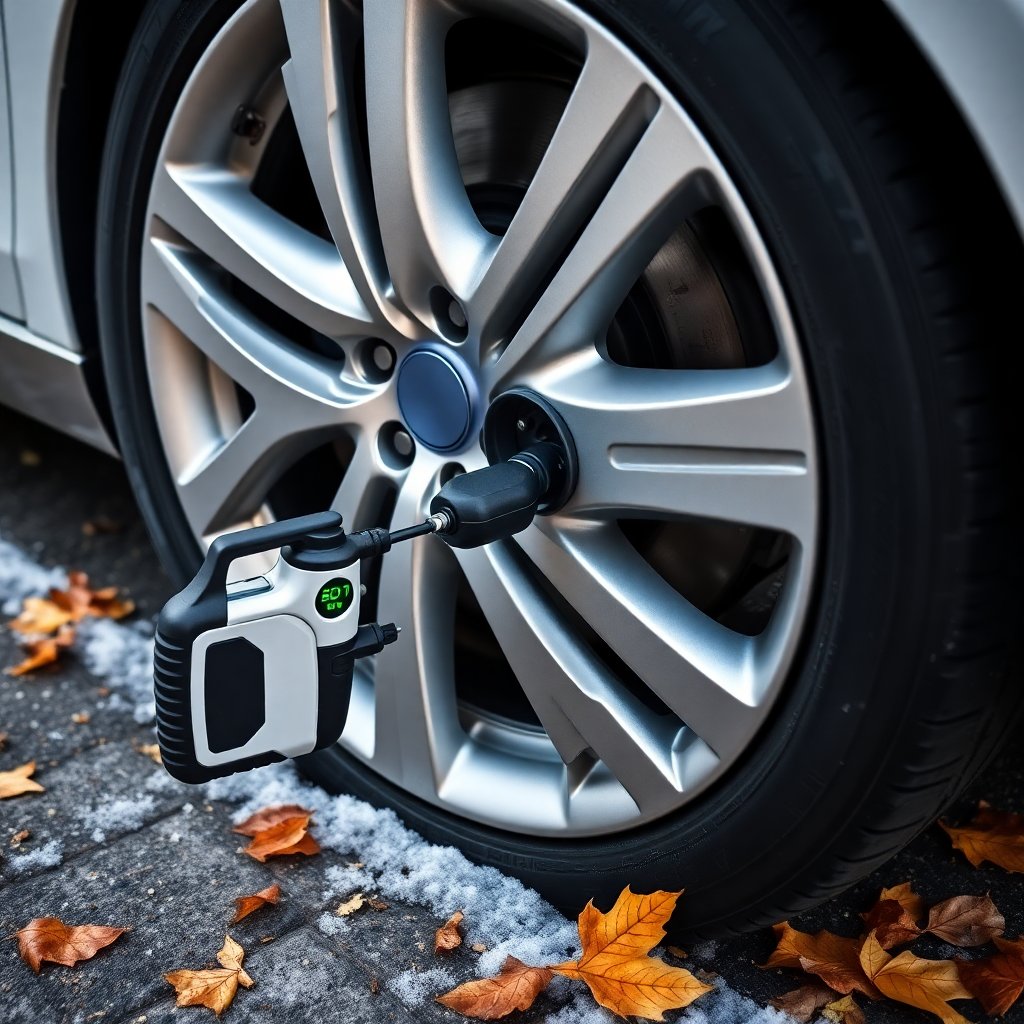
The first cold snap of the fall is when the yellow tire-pressure warning shows up on a lot of Tesla screens. Nothing is wrong with the tires. The air inside them just contracts as the temperature falls, and a car that read perfectly in September is suddenly several psi low on a frosty October morning. Driving on underinflated tires costs range, wears the tread unevenly, and makes the car feel softer and less precise.
The fix takes five minutes if you own a decent portable tire inflator. It is one of the least glamorous accessories you can buy for a Tesla and one of the most useful, especially because many Teslas do not ship with a spare tire, and depending on build date and market, yours may not have come with any inflator or repair kit at all. This guide covers what to look for and which inflator types make sense for each owner.
Affiliate disclosure: theampmods.com earns a commission from qualifying Amazon purchases made through links on this page, at no extra cost to you. Prices and models change often, so confirm specs on the current listing.
Why Cold Weather Hits Tesla Tire Pressure So Hard
Tire pressure drops roughly 1 psi for every 10°F drop in air temperature. That is a widely cited rule of thumb from tire makers and safety agencies, and it adds up fast. A car set to spec on a 75°F afternoon can read 4 to 5 psi low on a 30°F morning without losing any air.
Three things make this matter more on a Tesla:
- Heavy cars, low-profile tires. EV battery packs are heavy, and many Tesla wheel packages use low-profile tires with less sidewall. Running them underinflated increases the risk of rim damage on potholes.
- Range is already down in winter. Cold batteries and cabin heating already reduce range. Rolling resistance from soft tires piles on top of that. Our cold-weather range and charging guide covers the rest of the winter efficiency picture.
- The TPMS warning is sensitive. Tesla's tire pressure monitoring system will flag a low tire, and there is no reason to drive around with the alert on when the fix is quick.
Always inflate to the pressure on the placard on your driver's door pillar, not the maximum number printed on the tire sidewall. Recommended pressures vary by model, trim, and wheel size, so check your own car rather than copying a forum post. Set pressure when the tires are cold, ideally before you drive in the morning.
The U.S. NHTSA tire safety guidance recommends checking tire pressure at least monthly, which is easy to forget until a cold front reminds you.
What to Look for in a Tesla Tire Inflator
Auto-Shutoff with a Preset Target
This is the feature that makes an inflator easy to live with. You dial in your placard pressure, hit start, and the compressor stops when it gets there. No hovering over a gauge, no overshooting. Nearly every modern digital inflator has this; skip any that do not.
Gauge Accuracy
Look for a stated accuracy around plus or minus 1 psi. Cheap built-in gauges can drift. It is worth cross-checking a new inflator against the car's own TPMS reading on the touchscreen, or a separate quality digital gauge, the first few times you use it. If your inflator consistently reads a couple of psi off, you can simply set the target to compensate.
Power Source: Cordless vs. 12V
Cordless (rechargeable battery) inflators are the most convenient for routine top-ups. No cables running into the cabin, no need to have the car on. They are ideal for the weekly or monthly pressure check in the garage. The tradeoff is limited runtime: most can top off four tires comfortably but may struggle to fill a fully flat tire on a single charge.
12V plug-in inflators run from the car's 12V accessory outlet and never run out of battery as long as the car is awake. Tesla's 12V socket has a current limit, so stay within the rating listed in your owner's manual. Some high-output compressors draw more than a car accessory outlet is designed to supply and are meant to clip directly to a battery, which is not practical on a Tesla. Pick a model whose rated draw fits your outlet.
Power-tool platform inflators (DeWalt, Milwaukee, Ryobi, and others) are a great buy if you already own that brand's batteries. They tend to be sturdier, push air faster, and share batteries with tools you already charge.
Hose Reach and Valve Connector
Make sure the hose and power cord can reach all four wheels. For 12V models, measure from the console outlet to the rear tire on the far side; a short cord means repositioning the car. A screw-on or locking Schrader chuck is more secure than a push-on clip, and a short flexible hose helps on low-profile wheels where the valve sits close to the rim.
Speed and Duty Cycle
Small compressors heat up. The spec sheet usually lists a duty cycle, such as running for a set number of minutes followed by a cool-down. For topping off cold-weather pressure loss that rarely matters. For a fully flat tire on a large Model X or Model Y wheel, a faster, higher-output unit saves real time.
→ Shop digital tire inflators with auto-shutoff on Amazon
Best Tire Inflator Types for Tesla Owners
Best for Most Owners: Compact Cordless Inflator
Why it works: small enough to live in the frunk or a cargo-area bin, rechargeable over USB-C on most current models, and fast enough to top off four tires in a few minutes. This is the one to buy if you just want to clear the TPMS warning on cold mornings without plugging anything into the car.
Watch out for: battery life on fully flat tires, and charge it every couple of months so it is ready when you need it. Lithium batteries also lose capacity in extreme cold, so store it in the house or garage if you can.
→ Shop compact cordless tire inflators on Amazon
Best Road-Trip Backup: 12V Inflator with Long Cord
Why it works: unlimited runtime while the car is on, which matters if you pick up a slow leak far from home. Pair it with a tire plug kit and you have a credible roadside setup for the many Teslas that do not carry a spare.
Watch out for: current draw versus your 12V outlet rating, and cord length to the rear wheels.
→ Shop 12V car tire inflators on Amazon
Best If You Own Power Tools: Battery-Platform Inflator
Why it works: if your garage already runs on one brand's battery system, the bare-tool inflator is often inexpensive and noticeably more robust than generic units. Many include both a high-pressure mode for tires and a high-volume mode for air mattresses and pool toys, which is handy for camping trips. If you do overnight trips in your car, our Tesla camping gear guide pairs well with this pick.
Watch out for: bulk; these are bigger than compact cordless units and less likely to live in the car full time.
Add-On Worth Owning: Tire Plug Kit
Why it works: an inflator restores pressure, but it cannot fix a puncture. A basic plug kit can seal a simple tread puncture well enough to get you to a tire shop. Treat plugs as a temporary fix and have the tire inspected professionally. Avoid sidewall repairs entirely; those mean a replacement tire.
→ Shop tire plug repair kits on Amazon
A Quick Cold-Morning Routine
- Check pressures on the touchscreen before you drive, while the tires are cold.
- Set the inflator target to the placard pressure for your car.
- Top off each tire, starting with the lowest.
- Drive a short distance and let the TPMS update; the readings refresh once the car is moving.
- Re-check after a big temperature swing. If the weather warms dramatically, pressure will rise again, so do not overinflate in anticipation.
If one tire keeps losing more pressure than the others, that is a leak, not the weather. Get it inspected.
Pair It with the Rest of Your Winter Kit
An inflator is one piece of a cold-weather setup that also includes good floor liners, an ice scraper that will not scratch glass, and, in snowy regions, proper winter tires. Our Tesla winter accessories roundup covers the full list, and it is worth working through before the first real storm rather than after.
The Bottom Line
Cold weather will drop your Tesla's tire pressure every fall, and the TPMS warning will keep coming back until you deal with it. A compact cordless inflator with auto-shutoff is the right buy for most owners: it lives in the frunk, takes minutes to use, and protects range, tread life, and your wheels. Add a 12V unit and a plug kit if you road-trip often, since many Teslas do not carry a spare. Set the pressure to the door placard, check it cold, and the warning light becomes a five-minute chore instead of a worry.
As an Amazon Associate we earn from qualifying purchases. This article contains affiliate links; if you buy through them we may earn a small commission at no additional cost to you.