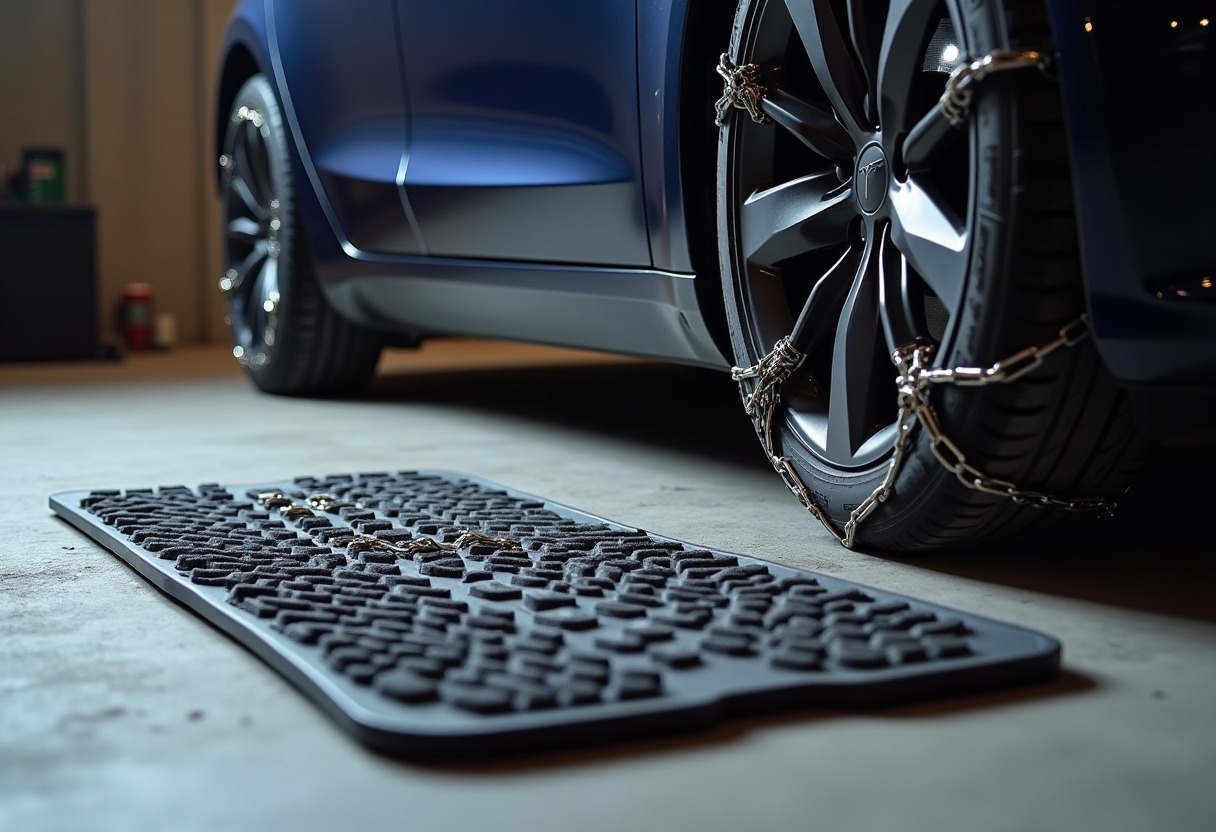
Winter hits your Tesla differently than a gas car, and standard winter prep doesn't cut it. Cold weather drains battery range by 20-40%, charging slows dramatically below freezing, and those sleek door handles can freeze shut in your driveway.
The accessories that matter aren't the ones that look good in marketing photos—they're the ones that work when you're scraping ice at 6 AM or stuck in snow with 15% battery remaining.
Why Tesla Winter Prep Differs From Traditional Cars
Electric vehicles face unique winter challenges that conventional cars don't. Battery chemistry changes at low temperatures, reducing both capacity and charging speed. The Tesla Model S can lose up to 40% of its EPA range in extreme cold, while regenerative braking becomes limited or disabled entirely.
Your Tesla's minimalist design also creates specific problems. Flush door handles can ice over, the glass roof loses heat rapidly, and the absence of engine heat means the cabin relies entirely on battery power for warmth. These factors combine to make winter accessories not just convenient, but essential for reliable operation.
Unlike gas cars that generate waste heat, every watt used for heating directly impacts your driving range. The right accessories can reduce this energy drain while keeping you safe and comfortable.
Essential Cold Weather Protection
Winter floor protection becomes critical when snow, salt, and ice regularly enter your cabin. Standard all-weather mats handle light moisture, but winter conditions require deeper channels and higher sidewalls to contain slush that would otherwise damage your Tesla's carpet and electronics underneath.
Quality → Shop winter floor mats on Amazon feature raised edges that create a basin for water and debris. Look for materials that remain flexible in sub-zero temperatures—cheap rubber becomes brittle and cracks. The best options use thermoplastic compounds that maintain grip and flexibility down to -40°F.
For comprehensive protection, our guide to Best Tesla Floor Mats 2026 covers year-round options, but winter demands specific features like drain plugs and antimicrobial treatments to prevent odor from trapped moisture.
Door seals deserve special attention in winter. Tesla's frameless windows rely on precise seal contact, and ice buildup can prevent proper closure or damage the weatherstripping. Regular application of silicone lubricant keeps seals flexible and prevents ice adhesion.
Snow Chains and Traction Solutions
Tesla's low ground clearance and performance tire widths complicate traditional snow chain selection. Standard chains often contact wheel wells or suspension components, while cable chains lack the clearance needed for safe installation.
| Chain Type | Model 3/Y Compatibility | Installation Time | Traction Rating | Price Range | |------------|-------------------------|-------------------|-----------------|-------------| | Low-profile chains | Good with stock wheels | 15-20 minutes | Excellent | $80-150 | | Cable chains | Limited clearance | 10-15 minutes | Good | $40-80 | | Fabric chains | Poor durability | 5 minutes | Fair | $60-120 | | Tire socks | Best fit for Teslas | 2-3 minutes | Good for light snow | $80-150 |
The most practical solution for Tesla owners is often tire socks or low-profile chain systems specifically designed for vehicles with limited wheel well clearance. → Shop Tesla snow chains on Amazon and verify compatibility with your specific wheel and tire combination.
Tire socks offer the easiest installation but wear quickly on dry pavement. Save them for situations where you need traction to reach plowed roads, then remove them promptly to preserve the fabric.
Cold Weather Charging Essentials
Charging behavior changes dramatically in winter. Lithium-ion batteries charge slower when cold, and Tesla's battery management system may limit charging speeds until the pack warms up. This process can add 30-60 minutes to a typical charging session.
Preconditioning your battery while still plugged in at home solves this problem for daily driving. Set your departure time in the Tesla app, and the car will warm the battery pack using grid power rather than depleting your range. This simple step can preserve 10-15 miles of range per day during cold snaps.
For longer trips, plan charging stops with Tesla's navigation system, which preconditions the battery en route to Superchargers. Without preconditioning, you'll sit at charging speeds as low as 25kW until the pack reaches optimal temperature.
Portable charging solutions become more critical in winter when range is reduced and heating systems draw additional power. Our Best Portable Ev Chargers 2026 guide covers emergency options, but remember that Level 1 charging provides minimal power in extreme cold—barely enough to offset heating loads.
Interior Comfort Without Range Drain
Seat heaters use significantly less energy than cabin heating—roughly 75 watts per seat versus 3000+ watts for the main HVAC system. Maximizing seat heater use while reducing cabin temperature by 5-10 degrees can preserve 20-30 miles of range on long winter drives.
Steering wheel heating provides similar efficiency gains. A → Shop heated steering wheel cover on Amazon offers aftermarket warmth without any electrical installation, though Tesla's factory heated wheel option provides better integration and efficiency.
Window insulation films designed for automotive use can reduce heat loss through the glass roof and windows. These nearly invisible films block infrared radiation while maintaining visibility, reducing the load on your heating system by 10-15%.
Ice Removal and Visibility Tools
Tesla's flush door handles and charge port can freeze shut, requiring specific tools for safe access. Standard ice scrapers often damage the paint or plastic trim around these areas.
The most effective approach combines a quality ice scraper with integrated brush, spray de-icer for stubborn areas, and microfiber cloths for final cleaning. → Shop ice scraper windshield on Amazon and look for scrapers with soft-edge blades that won't scratch glass or damage trim.
For charge port access, use a hair dryer or warm cloth rather than force. The charge port door mechanism can be damaged by excessive pressure when frozen. De-icing spray around the perimeter usually frees stuck doors within minutes.
Keep a small bottle of washer fluid in the car for emergency windshield cleaning. Tesla's washer fluid reservoir is smaller than most vehicles, and winter driving consumes fluid rapidly due to salt spray and road grime.
Advanced Winter Preparation
Remote climate control through the Tesla mobile app allows you to warm the cabin while the car remains plugged in, preserving battery range. Start warming 15-20 minutes before departure to ensure comfortable interior temperatures without impacting your available range.
Battery thermal management becomes visible in winter. The blue snowflake icon indicates cold battery conditions with reduced regenerative braking and charging speeds. Plan for longer stopping distances and reduced energy recovery when this icon appears.
For extreme cold conditions below -10°F, consider installing a battery thermal management system designed for EVs. These systems use minimal power to maintain optimal battery temperature during extended parking, preventing the deep cold that can damage lithium-ion cells over time.
Frequently Asked Questions
Do Tesla snow chains fit all Model 3 and Model Y wheel sizes? No, chain compatibility depends on your specific wheel and tire combination. 18-inch Aero wheels have the most clearance and work with most low-profile chains. 19-inch Sport wheels require careful measurement, and 20+ inch Performance wheels often cannot accommodate traditional chains at all. Always verify clearance measurements before purchase and consider tire socks as an alternative for larger wheels.
How much does winter weather actually reduce Tesla range? Real-world winter range reduction varies from 15% in mild conditions to 40% in extreme cold with heavy heating use. The largest factors are ambient temperature below 20°F, constant highway speeds over 70 mph, and aggressive cabin heating. Using seat heaters instead of cabin heat, preconditioning while plugged in, and maintaining moderate speeds can limit losses to 20-25% even in harsh conditions.
Can I leave my Tesla plugged in during winter storms? Yes, leaving your Tesla plugged in during winter provides several benefits including battery thermal management, the ability to precondition remotely, and ensuring full charge for emergency situations. Tesla's charging system automatically manages power delivery and won't overcharge the battery. The car draws minimal power when not actively charging, primarily for thermal management and normal vampire drain.
What's the best way to prevent Tesla door handles from freezing? Regular application of silicone spray lubricant to door handle mechanisms and weatherstripping prevents ice buildup. Avoid using WD-40 or petroleum-based products that can damage rubber seals. If handles do freeze, use a hair dryer or pour warm (not hot) water over the handle area. The Tesla mobile app can also pop the handles remotely, which sometimes breaks ice adhesion.
Should I switch to winter tires or just use all-seasons with chains? Winter tires provide superior traction, shorter stopping distances, and better handling in all cold conditions—not just snow and ice. They remain effective down to 45°F when all-season tires begin losing grip. For areas with regular winter weather, dedicated winter tires offer better safety and performance than all-seasons with occasional chain use. The compound difference is significant enough that winter tires on bare pavement outperform all-seasons with chains in many conditions.
The right winter accessories turn your Tesla from a fair-weather friend into a reliable cold-weather companion that maintains both safety and efficiency when temperatures drop.
Some links on this page are affiliate links. We may earn a small commission if you purchase through them, at no extra cost to you.
As an Amazon Associate we earn from qualifying purchases. This article contains affiliate links; if you buy through them we may earn a small commission at no additional cost to you.