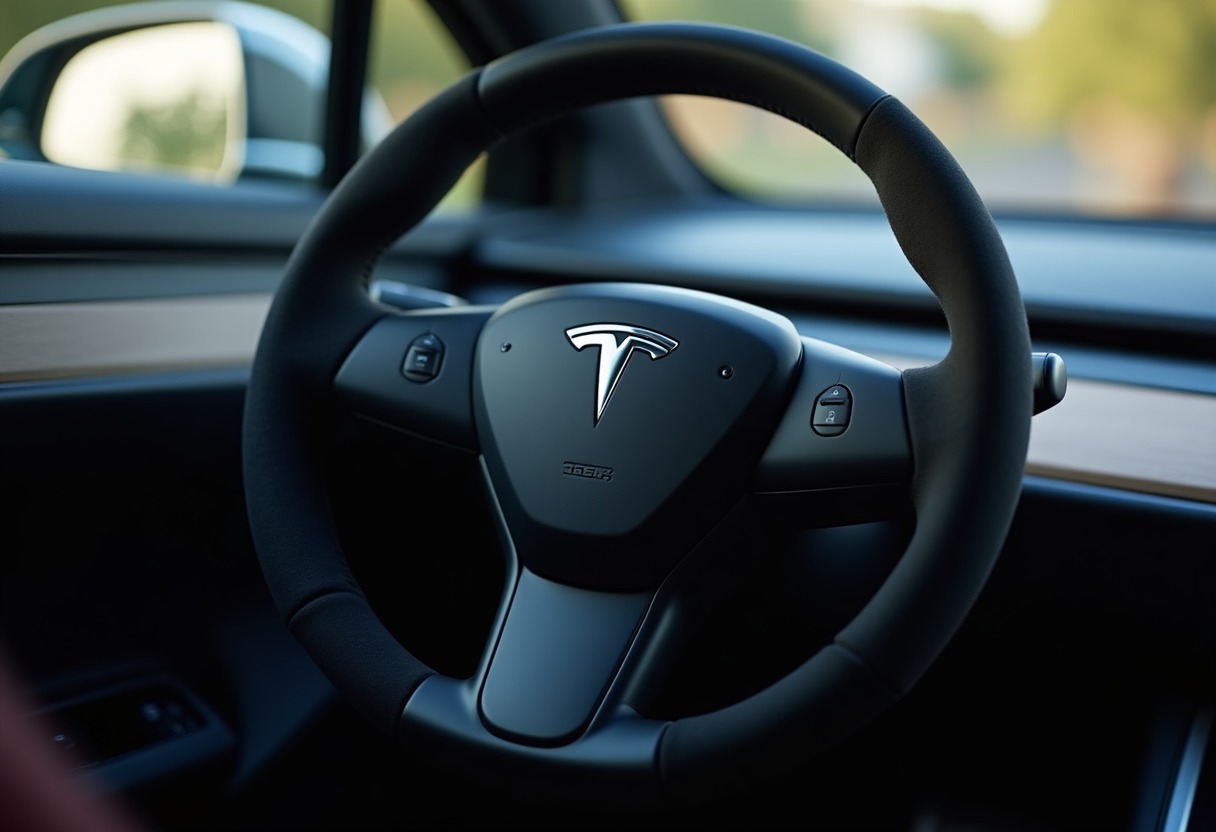
Your Model 3's steering wheel is already showing wear at 15,000 miles — the vegan leather feels slick where your thumbs rest, and there's visible discoloration where you grip during turns. You're researching covers to stop the damage, but here's the truth most sellers won't tell you: the wrong cover accelerates deterioration faster than bare hands ever could.
Why Tesla Steering Wheels Wear Differently Than Traditional Leather
Tesla uses polyurethane-based vegan leather across most interior surfaces, including steering wheels on Model 3 and Model Y vehicles (Performance trims get Alcantara inserts). This material behaves fundamentally differently than traditional cowhide. Vegan leather consists of a polyurethane coating bonded to a fabric backing — when that coating delaminates or cracks, the damage is permanent and irreversible.
The primary wear mechanism isn't abrasion like traditional leather. Vegan leather fails from sustained compression, heat cycling, and moisture exposure. Your hands transfer oils, lotions, hand sanitizer residue, and sweat onto the wheel surface. Temperature fluctuations from 30°F winter mornings to 140°F cabin heat in summer parking lots stress the polyurethane coating. The material has no ability to absorb and redistribute oils like natural leather does — it either repels them or breaks down trying.
Tesla's warranty explicitly excludes "wear and tear" on interior surfaces. Service centers routinely deny steering wheel replacement claims around 20,000-30,000 miles unless there's a manufacturing defect. The wheel is designed to last the vehicle's lifetime with proper care, but that care doesn't include most aftermarket covers.
How Steering Wheel Covers Actually Accelerate Damage
Most generic Tesla Model 3 steering wheel covers create a microclimate that speeds up vegan leather degradation. Here's the mechanism:
Covers trap moisture between the material and the wheel surface. Your hands sweat during normal driving — especially in warm weather or stressful traffic. That moisture has nowhere to evaporate when trapped under neoprene, silicone, or thick fabric covers. The constant damp environment softens the polyurethane coating and weakens the bond to the fabric backing. After 3-6 months, you remove the cover and find the steering wheel in worse condition than when you started.
Friction from the cover itself compounds the problem. Every time you turn the wheel, the cover shifts slightly against the vegan leather surface — creating micro-abrasion that wouldn't occur from skin contact alone. Tight-fitting covers that seem more secure actually generate more friction. Loose covers bunch and wrinkle during turns, concentrating wear in specific spots.
Heat retention is the third issue. Black steering wheel covers absorb solar heat and hold it against the wheel material during parking. The polyurethane coating becomes tacky at temperatures above 120°F, making it vulnerable to compression damage and allowing oils to penetrate deeper into the material structure.
Cover Types Compared: What Works and What Fails
| Cover Type | Moisture Management | Heat Impact | Installation Permanence | Actual Protection Rating | |------------|-------------------|-------------|----------------------|-------------------------| | Neoprene slip-on | Poor — traps 100% of moisture | High — acts as insulation | Temporary, shifts during use | 2/10 — accelerates wear | | Microfiber wrap | Moderate — absorbs but holds moisture | Moderate — less solar gain | Semi-permanent with adhesive | 5/10 — better for grip, still risky | | Alcantara cover | Good — wicks moisture away | Low — breathable material | Permanent sewn install | 7/10 — best option if properly fitted | | Leather wrap | Poor — non-breathable surface | Moderate — varies by color | Permanent sewn/glued install | 4/10 — defeats purpose of vegan interior |
The data tells a clear story: temporary covers create more problems than they solve. Even microfiber steering wheel wraps that claim to "protect" still trap oils against the original surface unless you're removing and washing them weekly.
What Actually Protects Tesla Steering Wheels Long-Term
Skip the cover entirely and focus on preventing the root causes of wear. Here's what works based on 100,000+ miles of combined Model 3/Y ownership experience:
Weekly cleaning routine: Use a dedicated vegan leather cleaner (not all-purpose interior spray) and microfiber cloth every 7-10 days. Wipe down the entire wheel circumference, paying attention to the 9 and 3 o'clock positions where your hands rest. This removes oils and residue before they penetrate the polyurethane coating. Takes 90 seconds per session.
Immediate residue removal: Keep a pack of alcohol-free wet wipes in your center console organizer. If you apply hand lotion, sunscreen, or hand sanitizer before driving, wipe your hands completely dry before touching the wheel. Alcohol-based sanitizers are particularly destructive to vegan leather — they dry out the plasticizers in the polyurethane and cause premature cracking.
UV protection during parking: Install a windshield sun reflector that covers the top half of the steering wheel when parked. Direct sunlight breaks down polyurethane faster than any other factor. A $25 reflector prevents more damage than a $40 steering wheel cover ever could.
Hand condition awareness: Dry, rough hands cause more abrasion than moisturized hands. Use unscented, non-greasy hand lotion in winter months — but let it absorb completely before driving. The goal is supple skin that glides over the wheel, not sticky residue that transfers to the material.
If you've already got early-stage wear (light discoloration or smoothness), a professionally installed alcantara steering wheel cover from a reputable upholstery shop is your only real option. These require hand-sewing and cost $200-400 installed, but they add genuine grip improvement and hide existing damage without creating the moisture trap problem of slip-on covers.
Specific Product Recommendations That Don't Cause Problems
Most steering wheel protection products fail the basic test: do they prevent damage without causing new damage? Here are the few that pass:
→ Shop vegan leather cleaner on Amazon — Chemical Guys and Nextzett make pH-balanced cleaners specifically for synthetic leather. Avoid products marketed for "all leather types" — they contain oils and conditioners that sit on top of vegan leather instead of absorbing.
→ Shop steering wheel protector covers on Amazon — If you absolutely need a temporary cover for a specific situation (cross-country move with shared drivers, winter glove use, protecting during a detail), get the lightest-weight breathable fabric version you can find. Remove it within 48 hours.
For Performance model owners with Alcantara-trimmed wheels, the care protocol is completely different. Alcantara is a synthetic suede that thrives on light abrasion — your hands actually help maintain the texture. Use a soft brush monthly to restore the nap, and spot-clean with diluted mild soap. Never apply any coating or protectant products to Alcantara.
The Protection Strategy Most Tesla Owners Miss
The real secret to long-term steering wheel preservation isn't adding protection — it's eliminating damage sources that happen outside the car. Three specific habits extend wheel life by years:
Post-gym protocol: If you work out before driving, wash your hands thoroughly with soap and dry them completely. Gym equipment residue (chalk, grip aids, cleaning chemicals) contains compounds that aggressively break down polyurethane. I've seen Model 3 wheels with severe degradation at 12,000 miles traced directly to CrossFit chalk residue.
Winter chemical awareness: Rock salt and ice melt products tracked into your car end up on your hands when you adjust climate controls or grab your phone. Those salt crystals then transfer to the steering wheel. Wear gloves when handling ice melt bags, and keep a dedicated hand towel in the car during winter months. The correlation between winter driving and accelerated steering wheel wear is dramatic in salt-belt states.
Professional detailing scheduling: Have a professional interior detail done every 12 months, not when the car "looks dirty." A proper detail removes embedded oils and contaminants that weekly cleaning misses. Detailers with vegan leather experience use enzymatic cleaners and steam extraction that you can't replicate at home. Budget $150-200 for this service — it's cheaper than a steering wheel replacement.
This approach aligns with the broader interior protection strategy covered in Tesla Interior Upgrades Worth It — focus on preventing damage rather than covering it up. The same principle applies to seat covers and door sill protection.
FAQ
Do steering wheel covers void Tesla warranty? They don't void the whole warranty, but they give Tesla Service clear grounds to deny any steering wheel replacement claim. The service manual explicitly states that aftermarket modifications to interior surfaces exempt those components from warranty coverage. If your cover caused moisture damage, you're paying for replacement out of pocket — typically $800-1,200 for parts and labor.
How long does Tesla vegan leather steering wheel last? With proper care (weekly cleaning, UV protection, hand hygiene), vegan leather steering wheels routinely exceed 100,000 miles without significant wear. Without care, visible degradation starts around 15,000-25,000 miles. The material doesn't suddenly fail — it gradually loses its coating and becomes tacky or smooth where your hands contact it most.
Can you repair worn vegan leather steering wheel? Not effectively. DIY repair kits and re-coating products provide purely cosmetic improvement that lasts 2-4 weeks before wearing off. Professional leather repair shops can color-match and fill minor cracks for $150-300, but the repair is visible up close and doesn't restore the original texture. Once the polyurethane coating delaminates, only full replacement or professional upholstery covering (hand-sewn Alcantara or leather wrap) truly fixes it.
Should Model Y Performance owners use steering wheel covers? No — Performance models already have Alcantara inserts on the wheel that provide superior grip and don't benefit from covering. Alcantara is more durable than vegan leather against hand oils and friction. Adding a cover over Alcantara negates the entire point of the Performance trim upgrade and reduces the tactile feedback that makes the wheel feel better than standard versions.
What causes the sticky feeling on worn Tesla steering wheels? Plasticizer migration — the chemicals that keep polyurethane flexible leach out of the material when exposed to UV light, heat, and oils. The surface becomes tacky because the remaining polyurethane has lost its structure. This is irreversible and happens faster when covers trap heat and moisture against the wheel. Once you feel stickiness, you're 6-12 months away from visible cracking.
The best steering wheel cover for your Tesla is the one you never install — proper care beats any aftermarket protection product available today.
Some links on this page are affiliate links. We may earn a small commission if you purchase through them, at no extra cost to you.
As an Amazon Associate we earn from qualifying purchases. This article contains affiliate links; if you buy through them we may earn a small commission at no additional cost to you.