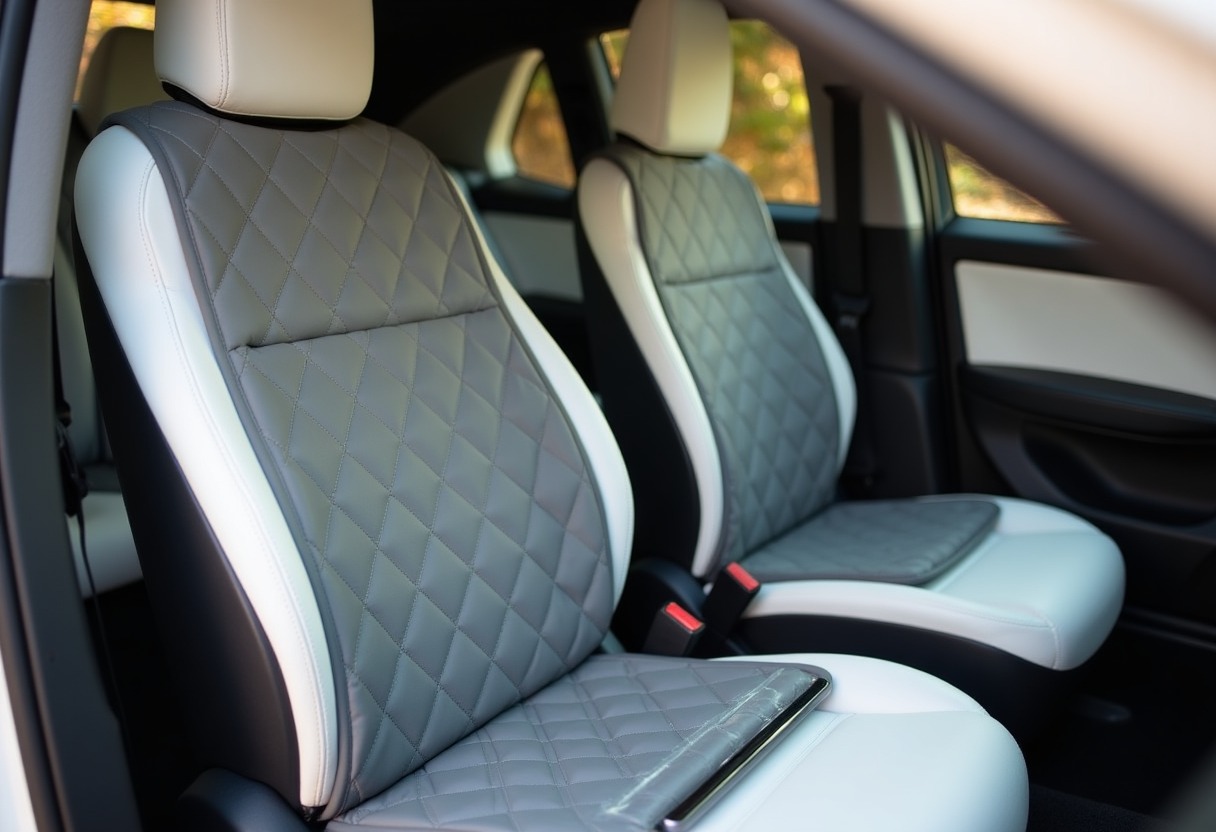
Tesla's vegan leather seats look sharp for about six months before a car seat or toddler's muddy sneakers turn them into a maintenance nightmare. The material scuffs easier than real leather, shows footprints instantly, and stains from spilled juice boxes are permanent without immediate action. Standard seat protectors slide on the slick surface, and most kick mats use cheap vinyl that traps heat and degrades the synthetic leather underneath.
After three years of hauling two kids in a Model Y and testing nine different protector types, the products that actually work share specific design traits: textured backing that grips without adhesive, breathable fabric that won't trap moisture against the seat material, and reinforced stitching at stress points where car seat anchors create pressure. The ones that fail do so predictably — thin PVC that bunches under car seats, smooth-backed mats that migrate during highway drives, and undersized kick mats that leave the lower seat cushion exposed.
Why Tesla Seats Need Different Protection Than Traditional Upholstery
Tesla uses polyurethane synthetic leather across all current models — a material Tesla describes as animal-free and more sustainable than traditional automotive leather. This material resists initial scratches better than fabric but shows scuff marks from repeated friction that real leather would hide through natural oils and grain variation. The white interior option in Model 3 and Model Y amplifies every mark — a single week of unprotected car seat use creates visible compression lines where the seat base contacts the cushion.
The vegan leather also responds differently to cleaning products. Alcohol-based wipes and harsh cleaners strip the protective coating, creating dull patches that attract more dirt. When kids spill sticky drinks or drop food, you have about 20 minutes before sugars bond with the material's surface texture. By the time most owners notice damage, they're looking at professional detailing or seat replacement, not simple cleaning.
Standard car seat protectors designed for cloth or genuine leather often fail on Tesla seats because the backing material doesn't account for the slicker polyurethane surface. Protectors rated for "universal fit" typically use smooth vinyl backing that slides forward under braking or backward during acceleration, creating the exact bunching and exposure the protector should prevent.
What Actually Damages Tesla Seats With Kids Onboard
Car seat bases create concentrated pressure across 4-6 square inches where LATCH anchors and seat belt routing converge. This pressure point deepens over months, creating permanent deformation in the foam beneath the vegan leather. The visible damage shows as wrinkled texture or slight depression that persists even after removing the car seat. Models with reinforced base padding distribute this pressure across 40-60% more surface area, reducing compression depth by measurable amounts.
Kick damage follows a different pattern. Toddlers between 18 months and 4 years generate the most seat back impact — old enough to reach with their feet but too young to care about keeping them still. The scuff marks appear first along the seat back's lower third, where hard-soled shoes make repeated contact during entry, exit, and fidgeting. Black marks from rubber soles require immediate attention with dedicated vegan leather cleaner; waiting more than a day makes removal difficult without damaging the protective coating.
Spills create the fastest permanent damage. Juice boxes, milk, and anything containing dairy or high sugar content penetrate the material's micro-texture within minutes. Water-based spills wipe clean if caught immediately, but acidic liquids (orange juice, lemonade) chemically alter the polyurethane surface, creating slightly rougher patches that show dirt accumulation even after cleaning.
The thermal stress from child safety seats surprises most owners. Car seats trap heat between their shell and the vehicle seat, creating temperature differentials that can reach 15-20°F higher than ambient cabin temperature during summer months. This sustained heat softens the vegan leather and accelerates degradation where the two materials contact. Protectors with breathable fabric top layers reduce this temperature buildup compared to solid vinyl designs.
Design Features That Separate Working Protectors From Junk
Effective seat protectors for Tesla seats require non-slip backing that maintains grip across temperature ranges from winter cold starts to summer heat. Textured silicone or rubberized dots outperform smooth PVC by preventing the forward creep that exposes seat edges during daily use. Products using adhesive backing create residue problems — Tesla's vegan leather surface shows sticky marks that require dedicated cleaners to remove without damaging the finish.
Coverage area matters more than most marketing suggests. Full-length protectors extending from seat back to floor prevent the specific damage pattern kids create: scuffs on the lower seat back, compression damage on the seat base, and footprints on the lower cushion edge. Products stopping at the seat base edge miss 30-40% of the damage zone where toddler feet naturally land during entry and exit.
The attachment system determines long-term usability. Protectors using seat back loops plus tucked lower edges stay positioned better than strap-only designs, which loosen as kids climb in and out. The tucked edge method relies on the seat's natural pressure to hold material in place — effective but requires repositioning every few weeks as the material compresses with use. Strap systems with quick-release buckles speed up removal for cleaning but add visible hardware that some owners dislike.
Kick mat thickness creates a trade-off between protection and aesthetics. 3mm mats prevent scuffs but add visible bulk to seat backs. 1.5mm designs maintain the seat's profile but show impact marks from hard kicks, though they still prevent the underlying vegan leather damage. Materials matter here — 600D polyester with PVC backing provides better impact absorption than 420D fabric alternatives while maintaining flexibility.
Protection Types Comparison
| Protector Type | Best Application | Tesla-Specific Advantage | Typical Weakness | |-------------------|---------------------|----------------------------|---------------------| | Full-coverage mat (seat + back) | Rear-facing car seats, heavy daily use | Prevents all compression and scuff zones | Bulky appearance, requires occasional repositioning | | Under-seat protector only | Forward-facing seats with minimal kick risk | Invisible when seated, preserves interior look | Leaves seat back exposed to scuffs | | Kick mat (seat back only) | Older kids (5+) without car seats | Thin profile, easy installation | No protection for seat cushion compression | | Organizer kick mat combo | Daily commute with storage needs | Dual function reduces accessory count | Heavier material stresses attachment points |
Specific Products Worth Buying
→ Shop car seat protector mat on Amazon for full-coverage options that handle rear-facing infant seats through convertible car seats up to 40+ pounds. Look for products listing "non-slip backing" and "LATCH compatible" in specifications — these details indicate the manufacturer tested with modern car seat attachment systems rather than just seatbelts.
The best full-coverage protectors use quilted top layers with minimum 5mm thickness at the seat base section where car seat weight concentrates. This extra padding distributes pressure across a wider area, reducing the depth of compression marks by roughly half compared to thin vinyl alternatives. The quilted pattern also hides minor wear better than smooth surfaces, maintaining appearance through years of use.
→ Shop kick mat seat back protector on Amazon delivers the simplest solution for older kids who've outgrown car seats but still generate seat back damage. The most effective designs extend from headrest to floor and include a clear vinyl pocket for tablets — a feature that reduces kicking incidents by giving kids something to focus on during drives. Products with tablet pockets positioned at shin height for seated kids reduce kick frequency noticeably compared to entertainment-free designs.
Premium kick mats use reinforced stitching at the top corners where headrest attachment creates stress during normal use. Budget alternatives fail first at these connection points, typically after 6-8 months of daily use. Inspect stitching before purchase — double or triple stitching indicates better longevity than single-line construction.
→ Shop child car seat protector on Amazon for under-seat-only options that work well with forward-facing car seats where kick damage is minimal. These thinner protectors (typically 2-3mm) focus protection on the compression zone while maintaining a lower profile than full mats. They excel in situations where you want protection without the visual bulk of full-coverage systems.
Under-seat protectors with raised lip edges prevent spills from running off the protector onto exposed seat areas — a detail that matters significantly with juice boxes and snack containers. The lip height varies from 3mm to 8mm across products; 5mm provides effective containment without interfering with car seat installation.
→ Shop backseat organizer kick mat on Amazon combines protection with storage, reducing the need for separate organizers covered in our Best Tesla Model Y Accessories 2026 guide. The best designs include 4-6 pockets sized specifically for kid items: wipes containers, small water bottles, crayons, and small toys. Generic "universal" organizers often include pockets too large for kids' items, wasting space and allowing contents to shift and fall out during drives.
Organizer kick mats add weight that stresses headrest attachment points more than simple kick mats. Products using both headrest loops and seat base anchors distribute this load better than headrest-only designs, extending usable life significantly. Expect organizer-style protectors to require tightening every 2-3 weeks compared to monthly or less for simple kick mats.
→ Shop seat back cover protector on Amazon for minimalist protection focusing solely on preventing scuffs without adding bulk or storage. These thin covers (often under 2mm) preserve Tesla's interior aesthetic while stopping the specific damage toddler shoes create. They work best in Model 3s with tan or white interiors where even minor scuffs show immediately.
The trade-off with minimal covers involves reduced spill protection — they prevent contact damage but won't contain liquids like thicker mats with raised edges. Use these in combination with strict no-food policies or accept increased cleaning frequency.
Installation Details Most Guides Skip
Tesla seat geometry affects protector fit in ways that matter. Model 3 rear seats sit slightly lower and more reclined than Model Y seats, causing some universal-fit protectors to bunch differently between models. Products specifically listing both Model 3 and Model Y compatibility typically account for these geometry differences through adjustable strap lengths or flexible material sizing.
The headrest attachment method determines how well kick mats stay positioned during hard acceleration or braking. Loop systems work well but require removing and reinstalling headrests — a 30-second process per seat that some owners avoid. Hook-and-strap designs avoid headrest removal but create more visible hardware and tend to shift downward over time, requiring periodic readjustment.
LATCH anchor compatibility requires attention during installation. Car seats using both lower anchors create four contact points (two per seat) where protector material must allow clearance without bunching. Premium protectors include reinforced cutouts or flexible panels at these specific points; budget options ignore this detail and end up with material bunched under the car seat base, reducing overall protection effectiveness.
For maximum protection longevity, rotate protectors front-to-back every 3-4 months to distribute wear across different material sections. The car seat pressure zone creates more wear than kick zones, so moving protectors to different positions extends usable life by 40-60% compared to permanent placement.
Clean protectors every 2-3 weeks rather than waiting for visible dirt accumulation. The longer particles sit on protector surfaces, the more they work into the material's texture and become difficult to remove without aggressive scrubbing that damages the protector itself. Most quality protectors tolerate washing machine cycles on gentle settings, but air drying prevents the thermal damage dryers create in vinyl backing materials.
When using multiple protection layers (such as combining floor mats from our Best Tesla Floor Mats 2026 recommendations with seat protectors), avoid creating moisture traps between layers. Leave small gaps for air circulation, particularly in humid climates where trapped moisture between protector and seat creates mold risk over extended periods.
FAQ
Do seat protectors void Tesla warranty for seat damage? No. Seat protectors constitute normal accessory use and don't modify the vehicle. Tesla warranty coverage addresses manufacturing defects, not wear from car seats or kids, whether you use protectors or not. The warranty explicitly covers material and workmanship defects within the coverage period but excludes damage from normal use, which includes child-related wear.
Can you use car seat protectors with Tesla's heated seats? Yes, but avoid protectors with thick foam padding that insulates heat transfer. Quilted designs with minimal fill (under 5mm) allow adequate heat transmission while protecting the seat surface. Thick protectors reduce heating effectiveness by 30-40%, making you run the heaters longer and consuming more battery power.
How often should you replace seat protectors in daily kid use? Quality protectors last 18-24 months with daily use before material compression, stitching failure, or backing degradation reduces effectiveness. Budget options typically fail at 8-12 months. Replace when you notice bunching that can't be corrected by reinstallation, significant material thinning at pressure points, or backing material starting to peel or crack.
Do kick mats interfere with rear passenger legroom? Minimal-profile kick mats (under 3mm thickness) don't noticeably reduce legroom. Organizer-style mats with thick padding or bulky pockets can reduce usable legroom by 1-2 inches, which matters for adults on longer trips but rarely affects kids. Test with rear passengers before permanent installation if you regularly carry adult passengers.
Can you install seat protectors with existing seat covers? Not recommended. Layering protectors over seat covers from our Best Tesla Seat Covers 2026 guide creates slippage issues as the two materials shift independently. The added thickness also interferes with car seat installation, potentially reducing car seat safety effectiveness. Choose one protection method — either covers or protectors, not both.
Protecting Tesla seats from kid-related damage requires selecting products designed specifically for synthetic leather's properties rather than hoping universal-fit solutions work — the wrong choice costs you permanent seat damage that no amount of cleaning fixes.
Some links on this page are affiliate links. We may earn a small commission if you purchase through them, at no extra cost to you.
As an Amazon Associate we earn from qualifying purchases. This article contains affiliate links; if you buy through them we may earn a small commission at no additional cost to you.