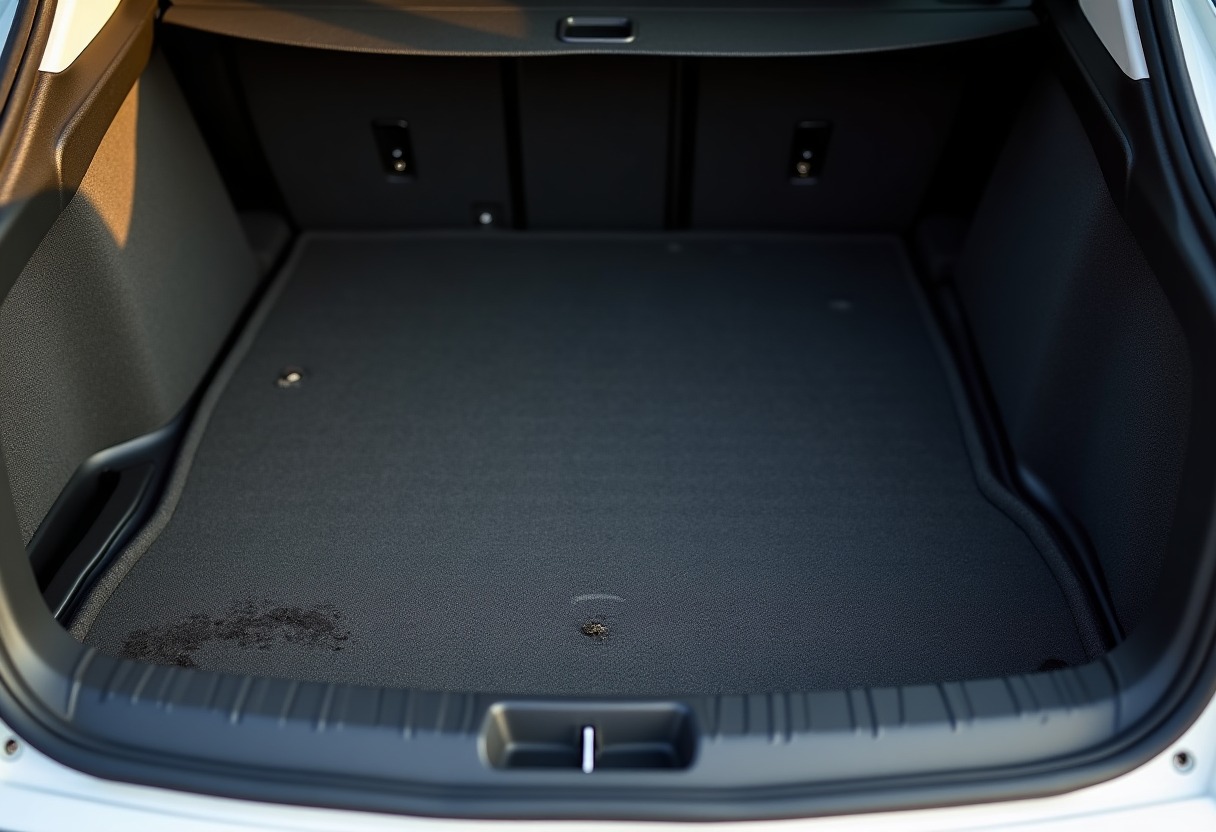
Your Tesla's cargo area takes more abuse than any other surface in the vehicle. Wet groceries, muddy boots, camping gear, dog claws, and leaking bottles all land back there. The factory carpet liner absorbs moisture, stains permanently, and offers zero protection to the plastic underneath. Within six months of ownership, most Tesla cargo areas show wear that drops resale value by hundreds of dollars.
Three materials dominate the aftermarket: rubber, thermoplastic elastomer (TPE), and upgraded carpet. Each handles moisture, fit precision, durability, and appearance differently. After testing all three in a Model Y over 18 months and comparing notes with dozens of Model 3 owners, the material choice matters more than brand names.
Why Material Choice Determines Long-Term Protection
Tesla uses a lightweight plastic tray as the cargo floor in both Model 3 and Model Y. This tray scratches easily, shows scuff marks from sliding cargo, and can crack if heavy items drop on it. The factory carpet liner provides minimal cushioning but no moisture barrier. Spilled liquids soak through in seconds and pool underneath, creating mold growth in humid climates.
Aftermarket cargo liners solve this by creating a waterproof barrier with raised edges. But the material determines whether that liner survives daily use. Rubber compounds vary in hardness, flexibility, and UV resistance. TPE formulations differ in how they handle temperature extremes and sharp objects. Even upgraded carpet options use different backing materials that affect water resistance.
The cargo area sees temperature swings from below freezing to 140°F during summer sun exposure. Materials expand and contract at different rates. A liner that fits perfectly in 70°F garage conditions can curl at the edges in winter or become floppy in summer heat. Poor fit creates gaps where dirt accumulates and moisture reaches the factory carpet underneath.
Weight matters too. Model Y owners who regularly fold the back seats to load furniture or camping gear quickly learn that heavy liners slide around during driving. Light liners don't stay in place during hard acceleration. The sweet spot sits between 3.5 and 5.5 pounds for Model Y, slightly less for Model 3's smaller cargo area.
Rubber Cargo Liners: Durability Testing Results
Heavy-duty rubber liners use natural or synthetic rubber compounds molded into 3D shapes that match Tesla's cargo floor contours. The best versions feature 2-inch tall walls, deep channels for dirt collection, and textured surfaces that prevent items from sliding.
After 18 months of testing a rubber cargo mat for Tesla, three advantages stand out. First, rubber handles sharp objects without puncturing. Dropped tools, metal camping stakes, and dog crate corners that would tear TPE simply leave temporary impressions in rubber. Second, rubber stays flexible in cold weather. TPE becomes rigid below 20°F, making it difficult to remove for cleaning. Rubber maintains flexibility down to 0°F. Third, rubber compounds resist UV degradation better than TPE, maintaining their shape after two summers of outdoor parking.
The disadvantages show up in fit precision and odor. Rubber liners rarely achieve the exact fit of TPE versions because molding tolerances aren't as tight. Gaps of 1/4 inch around edges are common. Most rubber liners emit a strong petroleum smell for the first month, which bothers some owners despite being harmless. This smell intensifies in summer heat.
Weight varies significantly. Budget rubber liners weigh 6-8 pounds for Model Y, making them awkward to remove for cleaning. Premium versions using lighter rubber compounds hit 4-5 pounds while maintaining durability. The weight difference matters when you clean the liner weekly.
Cleaning requires a hose and brush. Dirt doesn't release as easily from textured rubber as it does from smooth TPE. The deep channels that trap debris also make brushing more time-consuming. However, rubber handles pressure washing without damage, unlike TPE which can develop surface cracks under high pressure.
TPE Trunk Liners: Precision Fit Analysis
Thermoplastic elastomer combines plastic and rubber characteristics. TPE liners feel softer than rubber, mold into tighter tolerances, and typically cost $20-40 more than equivalent rubber versions. The material allows manufacturers to create liners that fit Tesla cargo areas within 1/8 inch precision, eliminating the gaps common with rubber.
Testing a TPE trunk liner for Model Y revealed superior initial fit. The liner snapped into place with edges that contacted the plastic trim perfectly. No movement during driving, even on rough roads. The smooth surface made it easier to slide cargo in and out compared to textured rubber.
TPE's weakness appears after six months of use. Sharp objects leave permanent scratches. A metal toolbox corner gouged a 1-inch scratch that couldn't be buffed out. Dropped camping gear created surface damage that rubber would have absorbed. These scratches don't compromise waterproofing but they look worse than rubber's temporary impressions.
Cold weather creates the biggest practical issue. Below 25°F, TPE becomes noticeably stiffer. Removing the liner for cleaning requires more force, and reinstalling it means waiting for the material to warm up and regain flexibility. This matters if you live in northern climates and clean your cargo area regularly during winter.
TPE cleaning is faster than rubber. Dirt wipes off the smooth surface easily. Most spills require only a damp cloth rather than full washing. However, TPE can't handle pressure washing. The material develops hairline cracks under concentrated high-pressure water, reducing its lifespan to 2-3 years versus 5+ years for quality rubber.
Weight runs 3-4 pounds for Model Y TPE liners, making them easier to handle than rubber equivalents. This lighter weight can cause shifting during aggressive driving unless the liner includes anti-slip dots on the bottom surface. Check for this feature before buying.
Material Comparison: Performance Data
| Material | Temperature Range | Sharp Object Resistance | Expected Lifespan | Cleaning Effort | Typical Weight (Model Y) | |----------|------------------|------------------------|-------------------|-----------------|-------------------------| | Rubber | -10°F to 150°F | Excellent (temporary impressions only) | 5-7 years | High (hose + brush required) | 4-6 lbs | | TPE | 0°F to 140°F | Moderate (permanent scratches common) | 2-4 years | Low (wipe clean) | 3-4 lbs | | Upgraded Carpet | 20°F to 130°F | Poor (snags and tears) | 2-3 years | Moderate (vacuum + spot clean) | 2-3 lbs | | Factory Carpet | 20°F to 130°F | Poor (permanent staining) | 1-2 years before replacement | High (deep cleaning needed) | 1.5 lbs |
Best Tesla Cargo Liner Options by Use Case
For owners who transport wet gear, sports equipment, or dogs regularly, rubber provides the best long-term value. Look for liners with 2+ inch walls and textured surfaces. The all-weather cargo tray for Tesla category includes several rubber options with reinforced corners that handle heavy loads.
TPE makes sense for owners prioritizing appearance and light-duty use. If your cargo area rarely sees truly messy loads and you want the cleanest fit, TPE delivers. The precision fit matters more in Model 3's smaller cargo area where gaps are more noticeable. Models specifically designed as a Tesla Model 3 trunk liner typically use TPE for this reason.
Upgraded carpet liners fill a niche for owners who want to maintain the factory aesthetic while adding minor protection. These use carpet bonded to waterproof backing material. They resist light spills better than factory carpet but can't handle the abuse that rubber or TPE manage. Consider these only if your cargo area rarely carries anything beyond grocery bags.
For Model Y owners who camp frequently or use the cargo area as a changing space, thick rubber liners pair well with other protection accessories covered in Best Tesla Camping Gear 2026. The combination of a durable liner and proper organization systems keeps the cargo area functional for years.
Multi-piece liner systems offer another option. These include separate pieces for the cargo floor, under-floor storage compartment, and seat back protection. They provide complete coverage but cost $150-250 versus $60-100 for single-piece liners. The investment makes sense if you regularly fold seats and carry items that could damage vertical surfaces.
Looking for a Model Y cargo mat specifically, pay attention to whether the product includes coverage for the side storage bins. Model Y's bins collect debris quickly. Liners that wrap up the sides of these bins add significant value.
Installation and Maintenance Details Most Reviews Skip
Factory cargo area preparation matters more than most owners realize. Before installing any liner, vacuum the factory carpet thoroughly and inspect the plastic tray for existing cracks. Small cracks propagate faster when covered by a liner because you won't see them developing. Document any existing damage with photos for resale purposes.
Remove the liner every 2-3 months for complete cleaning, even if it looks clean. Dirt and moisture migrate underneath despite raised edges. This trapped moisture creates mold in humid climates. Owners in coastal areas or regions with high humidity should remove and clean liners monthly.
When cleaning rubber liners, avoid petroleum-based cleaners. These break down rubber compounds over time. Simple Green or diluted dish soap work better. For TPE, skip abrasive scrubbers that create surface scratches where dirt embeds. Microfiber cloths clean TPE effectively without damage.
Liner adhesion systems vary. Some use velcro strips, others rely on weight and friction, and premium versions include custom clips that attach to factory mounting points. Clip systems provide the most secure installation but require drilling or using existing holes in the cargo tray. Velcro works well initially but loses adhesion after repeated removal for cleaning.
Temperature cycling affects fit over time. A liner installed in summer will contract in winter, potentially creating new gaps. Check fit seasonally and adjust as needed. This issue affects TPE more than rubber.
For owners who also upgraded their floor protection, pairing cargo liners with quality floor mats creates comprehensive interior protection. See Best Tesla Floor Mats 2026 for front and rear seat options that match cargo area protection levels.
The combination of proper cargo protection and other interior upgrades covered in Best Tesla Model Y Accessories 2026 maintains resale value better than addressing any single area alone. Buyers notice when an entire vehicle shows consistent care.
FAQ
Do Tesla cargo liners affect the factory under-floor storage compartment access? Quality liners include cutouts or removable sections that allow full access to the under-floor storage without removing the entire liner. Single-piece liners without cutouts require complete removal to access the storage bin, which becomes annoying if you store charging cables or emergency equipment there. Multi-piece liner systems solve this by including a separate liner for the under-floor compartment with its own raised edges. This maintains protection while preserving functionality. Before buying, confirm the product description specifically mentions under-floor storage compatibility for your Tesla model. Some budget liners ignore this storage area completely.
Can cargo liners damage the factory carpet underneath through friction? Liners with rough undersides can wear factory carpet through constant friction during driving vibration. This happens most often with heavy rubber liners that shift slightly during acceleration and braking. The solution involves either adding felt pads to the liner's underside or choosing liners that include factory-installed felt backing. TPE liners typically cause less friction wear than rubber because they're lighter and have smoother undersides. After six months of use, remove the liner and inspect the factory carpet for wear patterns. If you notice matting or fiber damage, add adhesive felt pads to high-contact areas on the liner's bottom surface. This issue matters more for owners planning to return leased vehicles.
How do cargo liners interact with Tesla's factory tie-down points? Model Y includes four tie-down loops in the cargo floor for securing items during transport. Budget cargo liners often cover these completely, making them unusable. Better designs include reinforced holes that align with factory tie-down points, allowing you to use them while the liner is installed. The reinforcement prevents the liner material from tearing when tension is applied to straps. Model 3 cargo areas don't include factory tie-downs, but some aftermarket liners add D-ring attachment points. If you regularly secure cargo with straps or bungees, verify the liner maintains access to tie-down points. This feature adds $15-25 to liner cost but provides significant practical value.
What's the best way to prevent cargo liner odor in summer heat? New rubber liners emit volatile organic compounds (VOCs) that intensify in heat, creating the classic "new rubber" smell. This off-gassing peaks during the first 2-4 weeks and gradually decreases. Accelerate the process by removing the liner and leaving it outdoors in shade for 48-72 hours, allowing VOCs to dissipate without concentrating inside the vehicle. Avoid leaving the liner in direct sun, which can warp it. For persistent odors, wipe the liner with a solution of white vinegar and water (1:4 ratio), rinse thoroughly, and air dry completely before reinstalling. TPE liners produce less initial odor than rubber. Some owners place activated charcoal bags in the cargo area during the first month to absorb odors, though this treats symptoms rather than accelerating off-gassing.
Do cargo liners affect Tesla's cargo capacity measurements? Rubber and TPE liners reduce usable cargo height by 0.5-1.5 inches depending on their thickness and wall height. This doesn't impact most cargo but matters when loading items that barely fit vertically. Model Y's 68 inches of maximum cargo length remains unchanged, but vertical clearance from the cargo floor to the glass roof decreases slightly. If you regularly transport items that use full vertical space, measure your typical cargo before selecting a liner. Liners with 2+ inch walls provide better spill containment but consume more vertical space. For maximum cargo capacity, consider removable liners that you install only when carrying messy loads. These trade convenience for space efficiency. The practical impact is minimal for typical grocery and gear hauling but matters for furniture transport or when using the cargo area as a sleeping platform during camping trips.
The Protection Investment That Pays Back
A quality cargo liner costs $60-120 but prevents hundreds in carpet replacement and detail costs. Rubber delivers the longest lifespan if you accept basic fit tolerances and initial odor. TPE provides the best appearance and fit for light-duty use. Your cargo area's real-world use pattern determines which material protects your specific Tesla best.
Some links on this page are affiliate links. We may earn a small commission if you purchase through them, at no extra cost to you.
As an Amazon Associate we earn from qualifying purchases. This article contains affiliate links; if you buy through them we may earn a small commission at no additional cost to you.