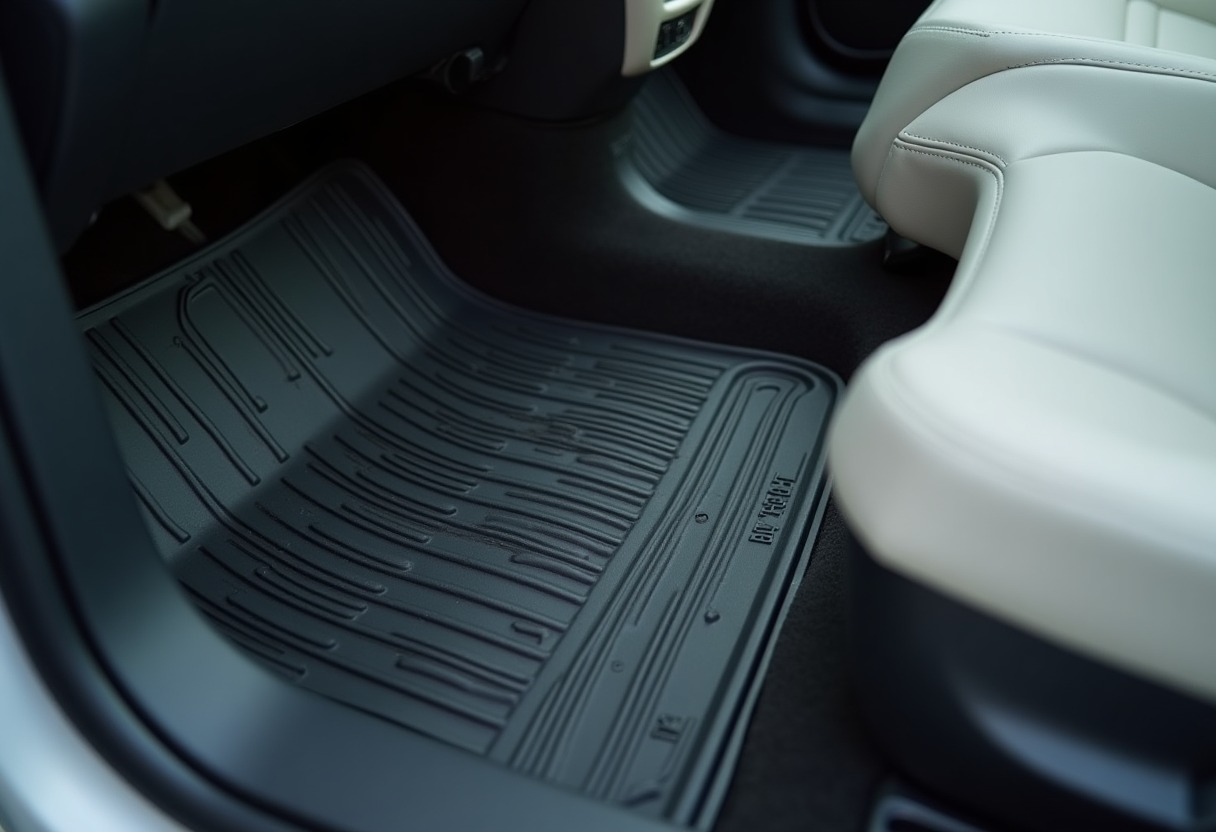
Most Tesla owners buy front-only floor mats, realize the rear carpets are taking a beating within three months, then spend another $100 on rear liners they should have ordered initially. The price difference between front coverage and a complete set runs $80-120, but Tesla's OEM carpet replacement costs $500-800 depending on the model — and that's before labor.
Why Rear Floor Protection Actually Matters in Teslas
Tesla's premium carpeting looks great in the showroom but wasn't engineered for the daily abuse of wet shoes, spilled drinks, pet claws, or sandy beach trips. The Model 3 and Model Y both use a plush cut-pile carpet that shows stains immediately and holds moisture against the subfloor, where it can cause odor and potential corrosion issues over time.
The rear footwells see different abuse than the front. Back seat passengers — especially kids — plant their feet directly on the carpet without the heel-rest areas that front seats provide. According to Tesla's own maintenance documentation, moisture intrusion in carpeted areas should be addressed immediately to prevent interior damage, but that's nearly impossible without protective liners in place.
Model 3 rear floors catch more debris because of the seat design — the lower seatback creates a catchment area for anything that falls from passengers' laps. Model Y owners deal with similar issues plus cargo area spillover when hauling groceries or gear. Both vehicles benefit from complete floor coverage, but usage patterns determine whether the cost makes sense.
Front-Only Coverage: When It Works
Front-only floor liner sets protect driver and passenger footwells while leaving rear floors with factory carpet. This approach saves money upfront — quality front sets run $80-150 versus $180-280 for complete coverage. The math works for specific use cases.
Single drivers who rarely use rear seats get minimal benefit from rear liners. If your Model 3 or Model Y functions as a solo commuter vehicle with occasional front-seat passengers, front coverage handles 95% of wear and dirt exposure. The rear carpets stay pristine because nobody touches them.
Lease vehicles with short terms (24 months or less) where rear seat use is minimal can skip rear protection. You'll return the car before rear carpet degradation becomes noticeable. Just document the rear floor condition at lease start with photos — some dealers try to charge for "excessive wear" on normal carpet use.
Child-free owners in dry climates who keep strict car cleanliness standards sometimes maintain bare rear carpets successfully. The key is "dry climate" — Seattle and Portland owners will watch moisture stains develop within weeks, while Phoenix and Las Vegas drivers might go years without issues.
Complete Set Coverage: The Real-World Calculation
Full coverage sets protect all four footwells plus center hump areas. Quality complete sets range $180-280 depending on material and fit precision. The question isn't whether complete coverage protects better — it obviously does — but whether the protection justifies the cost for your specific use case.
Families with kids need rear protection immediately. Children track in 70% more dirt and moisture than adults based on footwear alone, and the odds of spilled juice boxes or dropped snacks in rear seats approach 100% over any ownership period longer than six months. One serious carpet stain from a spilled smoothie costs more to professionally clean ($150-200) than the difference between front-only and complete liner sets.
Dog owners should buy complete sets regardless of where pets normally sit. Even well-trained dogs shift positions during drives, and wet paws or muddy coats contact multiple surfaces. → Shop TPE car floor mats Tesla on Amazon provides easy cleanup that carpet simply can't match when dealing with pet-related messes.
Frequent rear passengers — carpooling, rideshare, or regular road trips with friends — generate enough foot traffic to justify rear protection. Four adults on a weekend ski trip will bring enough snow melt into the cabin to thoroughly soak rear carpets if they're unprotected. The same applies to beach trips, hiking excursions, or any activity that puts dirty shoes in your Tesla repeatedly.
Resale value protection matters more than most owners realize. Prospective buyers inspect rear carpets carefully during used vehicle evaluations. Stained or worn rear floors signal poor maintenance and reduce offers by $300-800 on average. Complete floor liner sets preserve that value for minimal upfront cost.
Coverage Comparison: Front-Only vs Complete Sets
| Factor | Front-Only Coverage | Complete Set Coverage | |--------|---------------------|----------------------| | Upfront Cost | $80-150 | $180-280 | | Protected Area | Driver/passenger footwells only (≈40% of floor) | All footwells + center areas (≈85% of floor) | | Replacement Cost Exposure | Rear carpet replacement: $300-500 | Minimal exposure across entire floor | | Best For | Solo drivers, lease vehicles under 2 years, child-free dry climate use | Families, dog owners, frequent passengers, all-weather driving | | Installation Time | 5-10 minutes (2 pieces) | 15-20 minutes (4-5 pieces depending on set) |
The coverage percentage differences are substantial. Front-only sets protect the areas with the most intense wear (driver's heel area especially) but leave the majority of your Tesla's floor exposed. Complete sets protect nearly all reachable carpet surfaces, with only small edge areas around seat tracks remaining uncovered.
For comprehensive interior protection, check out our guide on Best Tesla Floor Mats 2026 which covers material choices and fit comparisons across brands.
Recommended Floor Liner Options by Coverage Type
Front-Only Premium Choice: → Shop Tesla Model 3 all weather floor mats on Amazon — Look for 3D-molded designs with 1.5-2 inch raised edges and heel pad reinforcement. Premium front sets from 3D MAXpider or TuxMat run $120-150 and provide excellent protection for high-wear areas. The deeper sidewalls contain winter slush and summer mud equally well.
Budget Front Coverage: Generic TPE front liners cost $40-80 but sacrifice precise fit around the dead pedal and center console edges. Acceptable for short-term use or lease vehicles where you need basic protection without premium investment. Expect gaps near corners where debris can slip underneath.
Complete Set — Best Value: → Shop custom fit floor liners Model 3 on Amazon — Mid-tier complete sets ($180-220) from brands like Taptes or Basenor offer good fit and durability without the premium price. TPE material cleans easily and doesn't crack in cold weather like cheaper rubber alternatives.
Complete Set — Premium Choice: High-end complete sets from 3D MAXpider or WeatherTech ($250-280) provide the most precise fit with minimal edge gaps and superior durability. The raised lip walls are typically 0.5 inches taller than budget options, which matters when you're hauling serious water or mud into the cabin.
Rear-Only Add-On: → Shop Tesla Model Y rear floor liners on Amazon — If you already own quality front liners and want to upgrade to full protection, rear-only sets run $80-120. Match the brand to your existing fronts when possible for consistent appearance and material quality.
If you're building a comprehensive protection setup, our Tesla Interior Upgrades Worth It guide covers which modifications provide the best return on investment.
What Most Coverage Guides Don't Address
The center hump coverage in rear seats creates a trap zone that many owners overlook. Items dropped between passengers — phones, wallets, keys — slide down and collect dirt, coins, and debris that's impossible to vacuum without removing seats. Quality complete sets include a formed center piece that catches this accumulation and lifts out for cleaning. Budget sets often skip the center section entirely, leaving that critical area exposed.
Seasonal storage matters more than most guides mention. If you're running front-only coverage during summer months and adding rear liners for winter, those rear pieces need somewhere to live during off-season. They don't stack flat — you're storing 6-8 pounds of molded TPE that won't compress. Plan for a shelf spot in your garage or 2-3 cubic feet of storage space before buying seasonal coverage pieces.
Material stiffness changes with temperature in ways that affect daily use. TPE liners that fit perfectly in 70°F conditions will stiffen and potentially lift at edges when temperatures drop below 20°F. The opposite happens in extreme heat — above 100°F, some budget TPE materials soften enough that aggressive driving can cause the mats to slide despite retention clips. Premium materials minimize this temperature sensitivity, which justifies their cost if you park outdoors year-round.
Odor retention in floor liners is rarely discussed but becomes apparent after six months with complete coverage. The increased surface area traps more moisture and organic material (food particles, pet dander) compared to front-only coverage. Complete set owners need to pull and clean their liners quarterly to prevent smell buildup, while front-only users can usually extend that to twice yearly. Budget an extra 20 minutes every three months for thorough liner cleaning if you run complete coverage.
For more interior organization solutions, check out our recommendations for Best Tesla Center Console Organizers 2026.
FAQ
Do I really need rear floor mats if I rarely have passengers?
Rare passenger use doesn't eliminate the need — it just changes the timeline. Most Tesla owners who skip rear protection regret it within the first year when they do use rear seats and realize how quickly single incidents damage carpet. One muddy hike, one beach trip, one winter carpool creates permanent stains. The rear carpets also collect debris that blows back from front seats during normal driving. If you use rear seats even quarterly, rear protection pays for itself compared to professional carpet cleaning costs.
Can I mix brands between front and rear floor liners?
Mixing brands creates aesthetic mismatches and potentially functional issues. Different manufacturers use different TPE formulations that age at different rates — after a year, your premium front mats might look new while budget rear pieces show cracking or discoloration. The surface texture varies between brands too, creating a visual discontinuity that looks cheap. Retention clip designs rarely match across brands, which means you might have clips showing in some areas but hidden in others. Spend the extra $30-40 to buy matching sets if you're going complete coverage.
How do complete floor liner sets affect Tesla's interior noise levels?
Quality floor liners reduce cabin noise slightly by adding mass to the floor and dampening vibrations. You'll notice the biggest difference on rough pavement — the heavy TPE material absorbs some of the resonance that would otherwise transmit through thin factory carpet. The effect is modest (1-2 dB reduction) but perceptible if you're sensitive to road noise. Budget liners are too thin to make any acoustic difference. This minor noise reduction applies equally to front-only and complete coverage, scaled to the amount of covered area.
What's the actual weight difference between front-only and complete liner sets?
Front-only sets typically weigh 4-6 pounds total, while complete sets add another 6-8 pounds for rear coverage — 10-14 pounds total system weight. That's negligible for range impact (less than 0.1% range reduction) but matters for owners who frequently remove liners for cleaning or seasonal swaps. Complete sets require two trips from car to cleaning area because carrying all pieces at once is awkward. The extra weight does help liners stay in place during aggressive driving, which partially offsets the retention clip effectiveness.
How long do Tesla all-weather floor liners actually last with complete coverage?
Premium complete sets last 5-7 years with regular cleaning before showing significant wear. Budget sets degrade noticeably after 2-3 years — edges crack, retention clips break, and the material loses flexibility. The rear pieces in complete sets actually outlast fronts because they see less direct wear — driver's side front mats wear first regardless of coverage configuration. UV exposure from sunroofs accelerates aging in both front and rear liners. If you park outdoors in intense sun, drop those lifespan estimates by 30-40%. Replace when retention clips fail or edges crack enough to allow moisture underneath, not when surface scratches appear. For related interior protection, review our guide on Best Tesla Seat Covers 2026.
The Coverage Decision Comes Down to Use Case
Front-only coverage works for solo drivers and short-term leases where rear seats stay empty — save the $100 and skip protection you won't use. Everyone else benefits from complete coverage that prevents the $500 carpet replacement cost that inevitably follows unprotected rear floors. → Shop raised edge floor mats Tesla on Amazon and buy complete sets from the start rather than upgrading piecemeal later.
Some links on this page are affiliate links. We may earn a small commission if you purchase through them, at no extra cost to you.
As an Amazon Associate we earn from qualifying purchases. This article contains affiliate links; if you buy through them we may earn a small commission at no additional cost to you.